Sayan Ridge, Ubud
Bambu Indah, Ubud: what it's like, who it suits and what to know before you stay
Bambu Indah is a paid partner of BaliHotels.com and checked this guide for accuracy.Updated
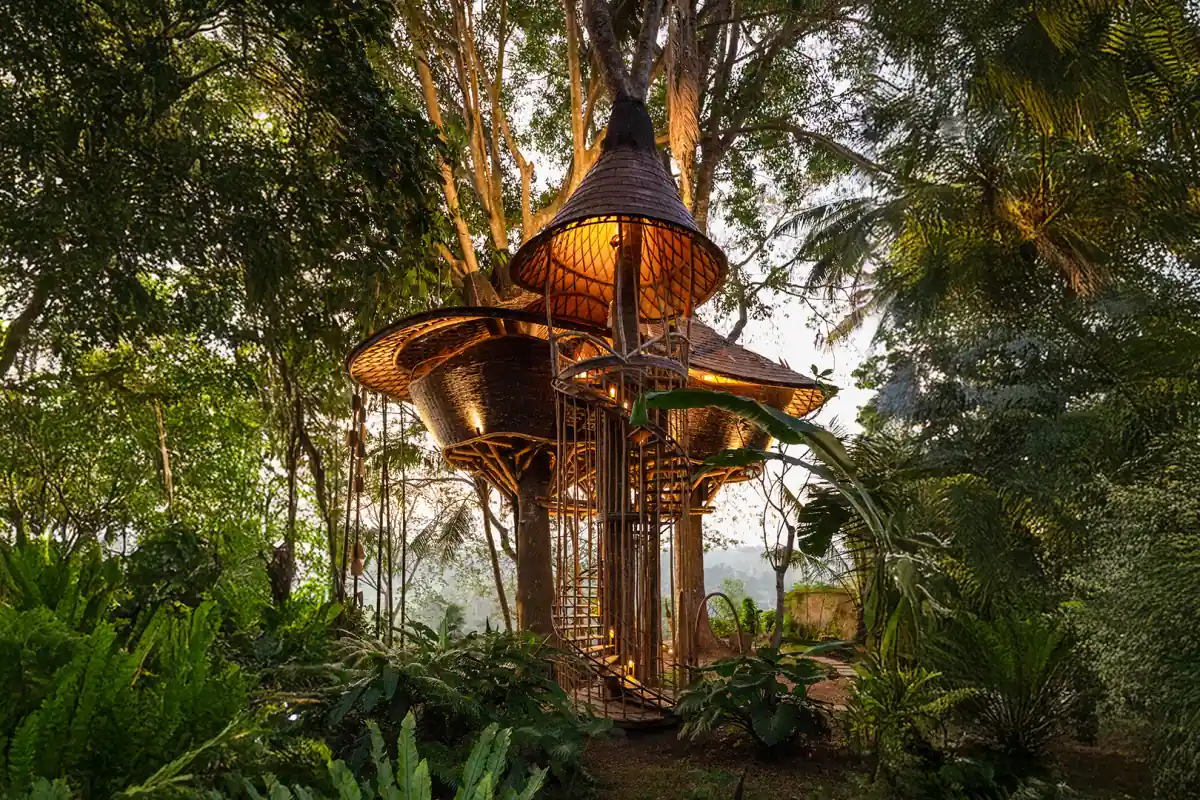
The short answer
- Location
- Sayan Ridge, Ubud
- Houses
- 23, each different
- To central Ubud
- 15 min by car
- Breakfast
- Included
What makes Bambu Indah different?
Most Bali hotels are built by a developer. Bambu Indah was built by a family who have spent decades arguing that buildings can improve the land they sit on rather than wear it down, and the property is the clearest statement of that argument.
John Hardy came to Bali in the 1970s and built a globally respected jewellery company by learning from Balinese silversmiths. With his wife Cynthia he went on to found the Green School, which opened in 2008 and was built entirely of bamboo. It proved bamboo could carry large, lasting buildings, which led to the Green Village homes and, over time, to Bambu Indah. The next generation is part of it too. Their daughter Elora Hardy founded Ibuku, the architecture firm behind the property's curving bamboo pavilions and bridges, and their son Orin Hardy founded Bamboo U, which teaches builders from around the world to work with bamboo.
The result uses almost no concrete. The buildings are made from materials that were grown, not mined, and when they reach the end of their life they will decompose back into the land rather than leave rubble behind. TIME Magazine has named Bambu Indahone of the World's Greatest Places, and after a period of renewal the property is now fully open.
Who is it best suited to?
It suits:
- Couples who want somewhere they will remember for the room itself, not just the view from it.
- Architecture and design lovers. This is one of the few places where you can sleep inside the work of a firm like Ibuku.
- Travellers interested in sustainability and food, who will get the most from the farm, the gardens and the kitchen.
- Slow travellers who want quiet mornings, a hammock and a walk through the rice fields rather than a packed itinerary.
It suits less well:
- Guests with limited mobility. The paths are uneven and parts of the property sit well down the ridge (see below).
- Anyone who wants to walk out to restaurants and bars. Central Ubud is a drive away.
- Travellers who prefer the predictability of a standard resort room: identical layouts, bright lighting, sealed indoor spaces.
- Anyone wanting a beach. Ubud is inland, which is why many visitors pair it with a few nights on the coast.
What are the houses, nests and tents like?
There are 23 places to stay, and no two are alike: bigger houses, smaller nests and two Mahogany tents, with names like Tree House, New Moon House, Riverbend House and Sumba House. They fall into two architectural styles that sit deliberately side by side.
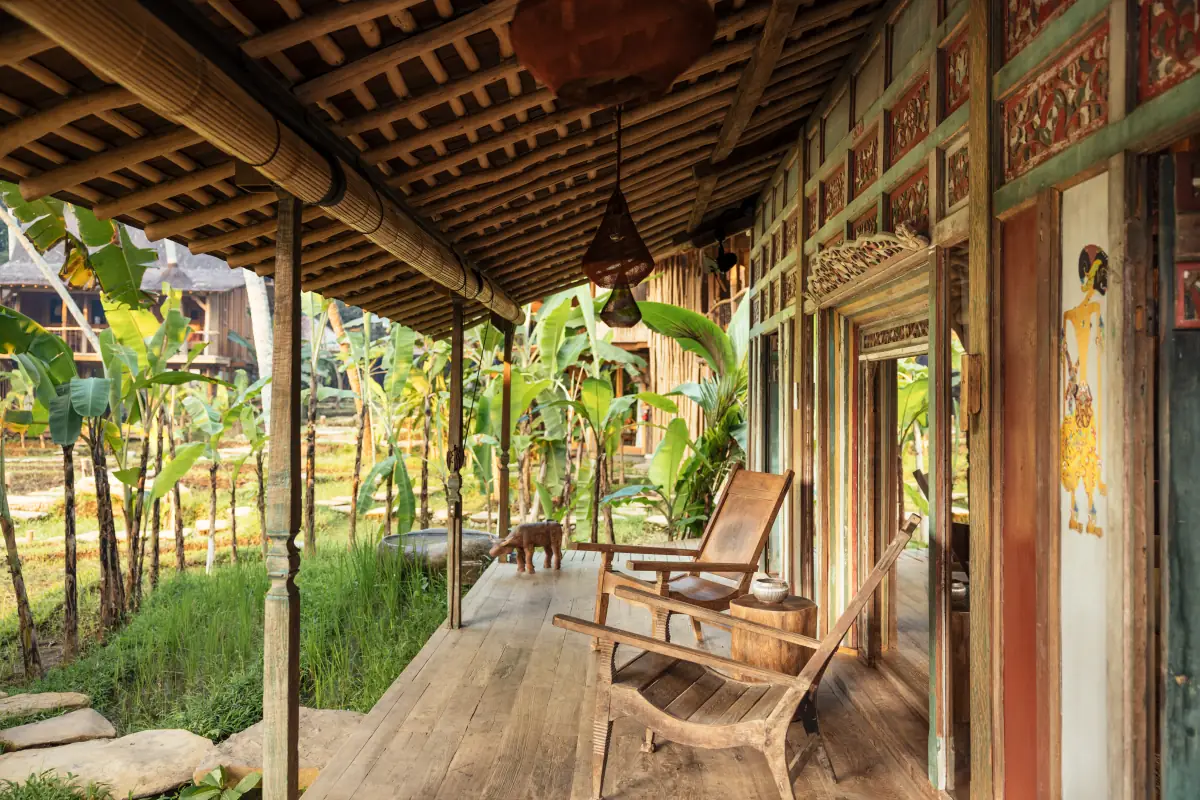
The antique teak homes. The original houses are traditional Javanese bridal homes, known as gladaks and joglos. John and Cynthia travelled through Java choosing abandoned structures, took them apart and rebuilt them on the ridge. They are built without nails: interlocking wooden joints hold them together and let the buildings flex in an earthquake. They feel heavy, warm and old in the best sense.
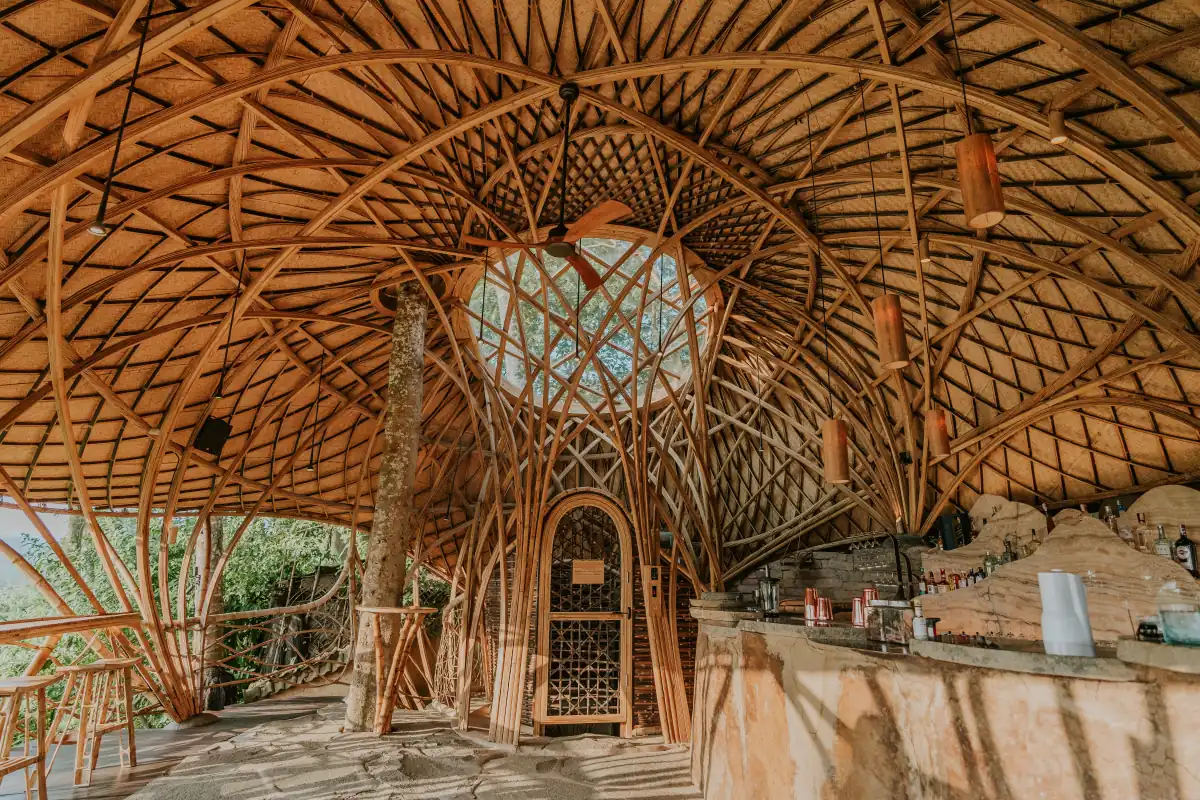
The bamboo structures. Ibuku's buildings are the opposite: light, curving and open. The New Moon House is the boldest example, with a silhouette of copper, brass and black bamboo and an open-air design that blurs the line between inside and out. Bamboo at this scale takes real craft. It is harvested at the right point in the lunar cycle, treated with natural salts and bent into shape while still green.
Houses are spread across the property. Yours might sit across a bamboo bridge, on the far side of a rice paddy or up in a tree. Each one is different, and you can choose a specific house when you book, so it pays to look before you commit.
What should guests know before booking?
The things that make Bambu Indah special are also the things worth planning for.
- Village-side or Riverside? The Village-side houses are at the top of the ridge, close to the entrance. The Riverside houses run down the ridge toward the water, which means more walking down, and back up, every time you come and go. With heavy luggage, young children or any mobility concerns, ask for Village-side.
- The paths are uneven on purpose. They are meant to slow you down. Pack shoes with some grip.
- Nights are dark. Lighting is kept low for stargazing and to respect the local wildlife. A phone torch helps on the walk back from dinner.
- Some houses are open to the air. You are in the jungle, with birdsong, insects and the sound of rain. That is the point, but it is not a sealed hotel room.
- Plan your transport. Central Ubud is a 15-minute drive and the property puts the airport at about 1.5 hours away. Book a transfer and expect to use a driver for evenings in town. Our airport transfer guide covers the options.
- Breakfast is included in every room rate and served at Riverside Warung.
- Some new facilities are still being built. The fermentation lab, mushroom cave, tea house and the new Bambu Indah Wellness programme are opening in stages. If any of them is the reason you are going, check it will be open for your dates.
- Offers usually need a minimum stay, commonly three nights (see current offers below).
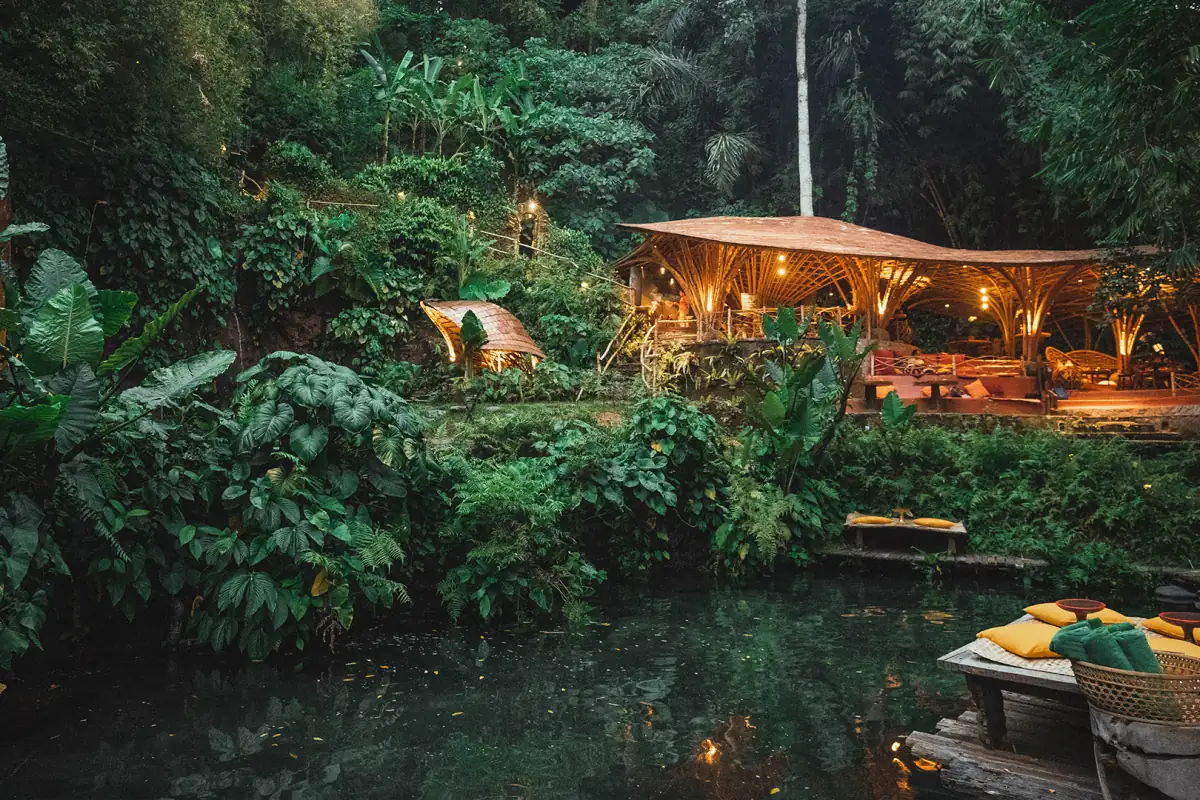
How does the location feel relative to Ubud?
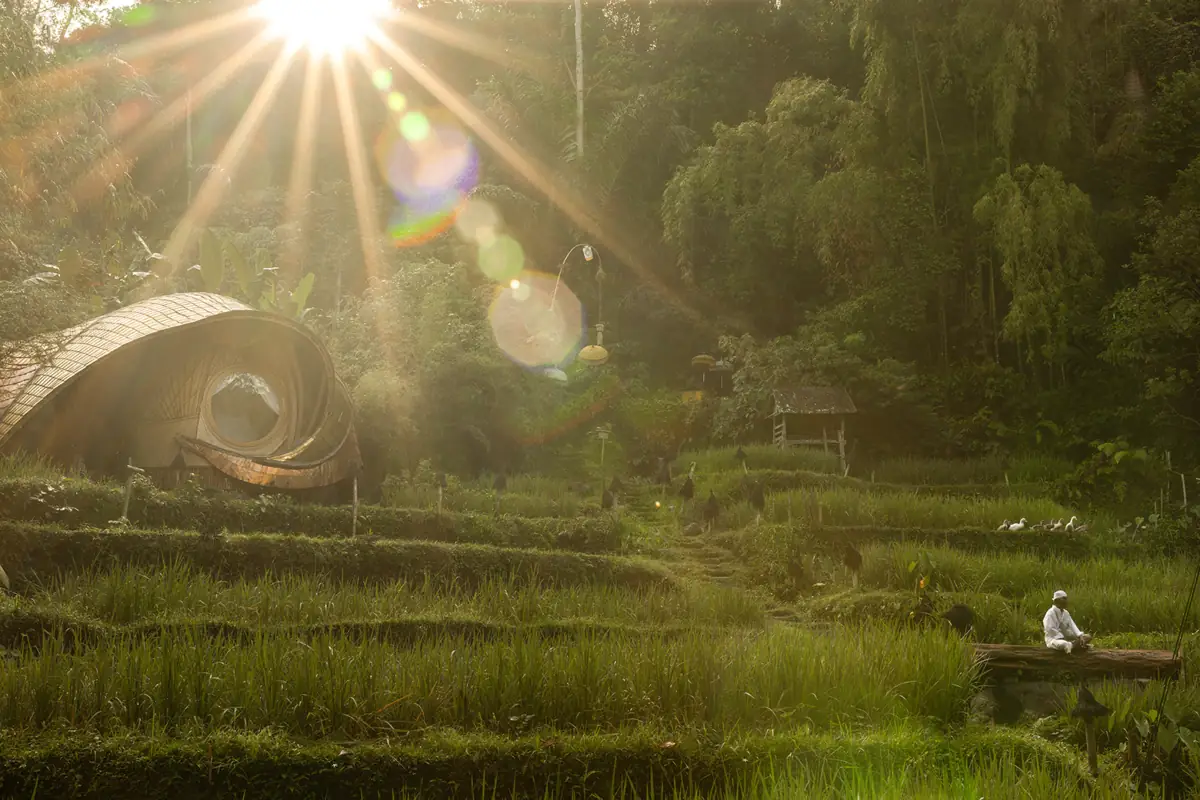
Bambu Indah is on the Sayan Ridge, 15 minutes outside the busy centre of Ubud, but it feels much further away than that. Before dawn the ridge is quiet, and the air smells of wet earth, clove and river water. By day you look over rice terraces and permaculture gardens, with the jungle dropping steeply to the Ayung River below.
Sayan is part of the river-valley belt where many of Ubud's secluded resorts sit (see our Ubud guide for how the areas compare). The trade-off is the usual one for staying outside the centre. It is far quieter than anywhere near the market, as our guide to quiet places to stay explains, but you will need a car to get into town. For many guests the property is the destination. A guided morning walk explains the Subak irrigation system that waters the rice terraces around you.
Why choose it over a conventional resort?
A conventional resort sells consistency: every room the same, every surface easy to clean. Bambu Indah offers almost the opposite, and for the right traveller that is the appeal.
- The rooms have a story. You sleep in an antique joglo or a hand-built bamboo house, not in key 214 of 300.
- The food is grown close by. The paths are planted with ginger, turmeric, chilli and wild cacao, organic waste goes back into the soil, and the family's Kul Kul Farm nearby supplies the kitchen and runs as a teaching farm for restorative agriculture. The main restaurant, Tembaga, is built around longevity and is expanding: the property is adding what it says will be the largest fermentation lab in Bali, along with a mushroom cave and a tea house.
- Wellness comes from the landscape. There are spring-fed pools and a riverside wood-fired sauna, and the new Bambu Indah Wellness programme, centred on a canoe-shaped open-air retreat house, will focus on active recovery, breathwork and movement rather than a conventional spa menu.
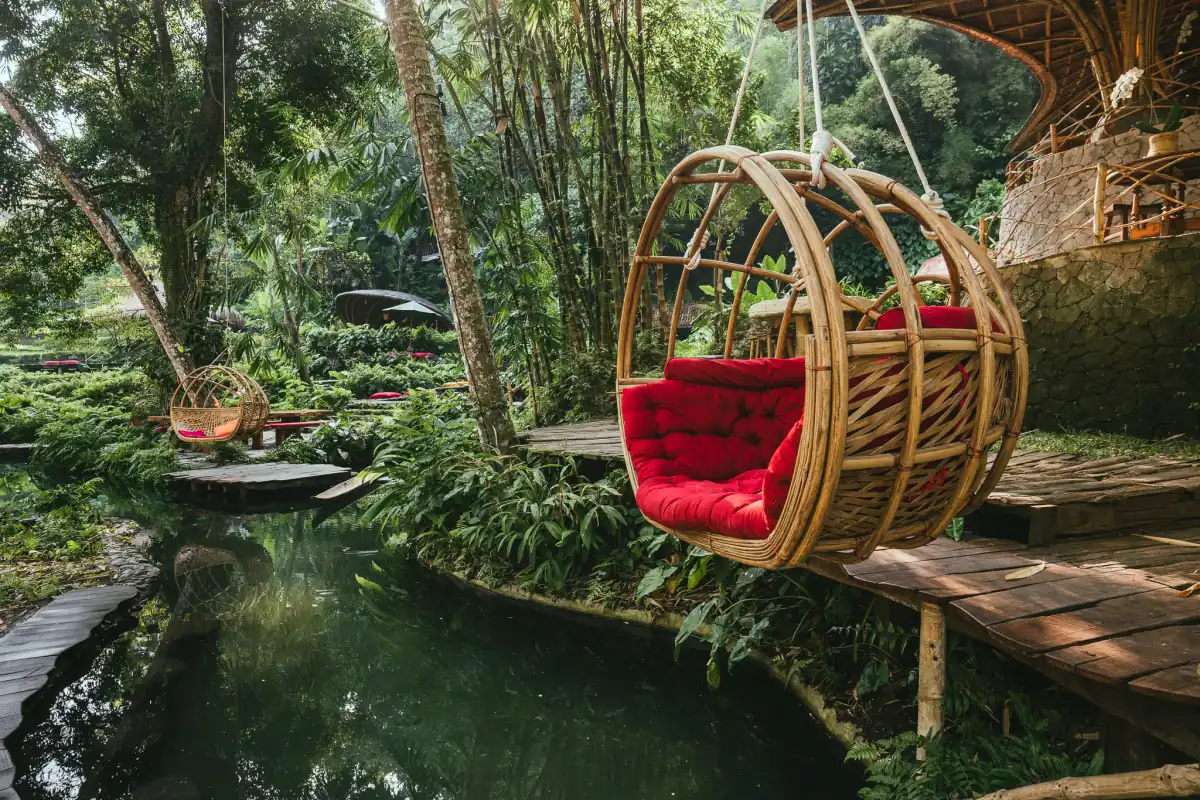
- It feels like someone's home. Guests are encouraged to treat the place as their own: read in a hammock, share tea with a stranger. The staff are warm without being formal.
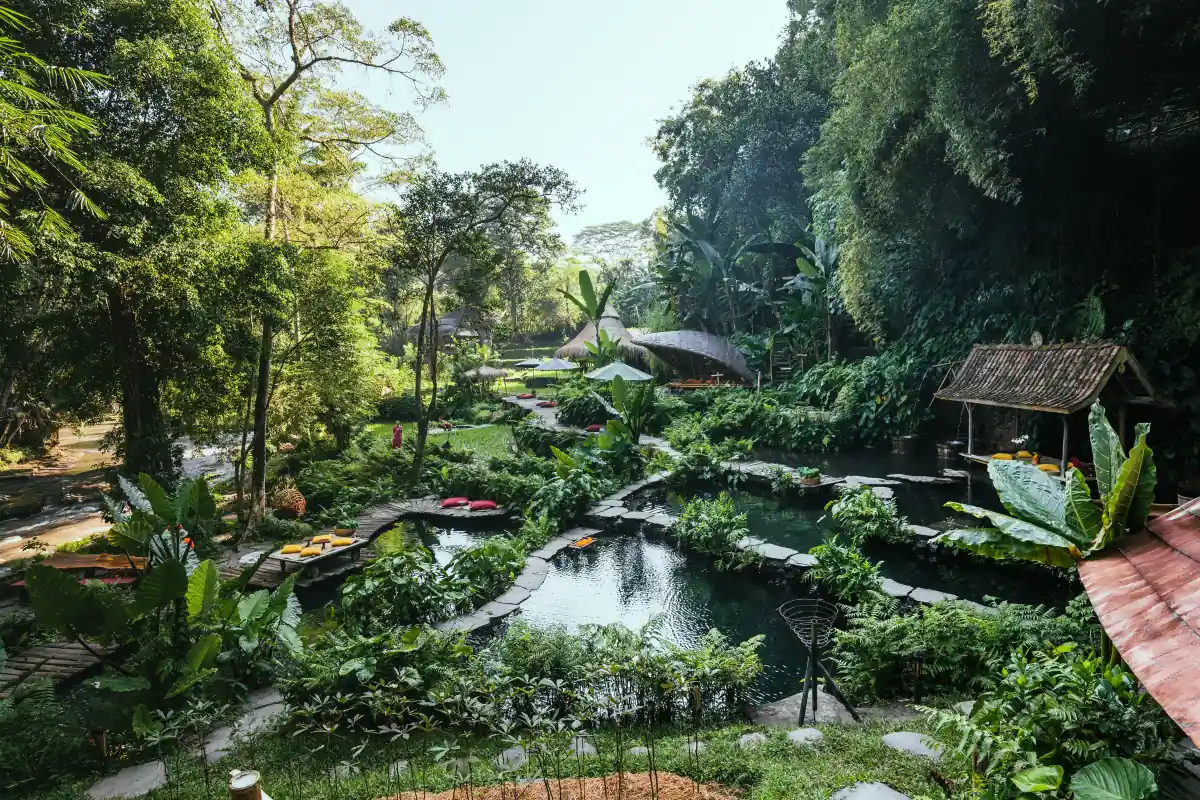
What you give up is flat paved paths, bright lighting, a nightlife strip on the doorstep and the reassurance of a room you could predict before you saw it. If those matter more to you, a conventional Ubud resort, or a private villa, is the better fit. If they don't, few places in Bali feel like this.
For more stays in the same spirit, see our guides to eco-friendly hotels in Bali and unique places to stay in Bali.
Current offers · October 2026
The Golden Serenade
For stays from 1 to 31 October 2026, booked by 31 October, with a three-night minimum. Includes daily breakfast, one three-course dinner, a traditional beji (melukat) water blessing, a guided tour of the John Hardy Gallery and a guided village walk.
A Season of Stillness
Stay three nights for a complimentary private yoga session. Stay four nights and choose either private yoga or a beji blessing. Includes daily breakfast and morning yoga.
Also running: Step Into the World of John Hardy (three nights or more), Romantic Serenity, A Journey for Every Generation and Harmony Bali. Terms change, so check the details on Bambu Indah's site.
Frequently asked questions
- Where is Bambu Indah?
- Bambu Indah is on the Sayan Ridge outside Ubud, Bali, a 15-minute drive from central Ubud. The property runs down through rice terraces and jungle to the Ayung River. The property puts the drive from the airport at about 1.5 hours.
- How many houses does Bambu Indah have?
- Bambu Indah has 23 individually designed houses, including smaller nests and two Mahogany tents. They are a mix of antique Javanese teak bridal homes, rebuilt on site without nails, and bamboo structures designed by the bamboo architecture firm Ibuku. No two are the same, and you can choose a specific house when booking.
- Who founded Bambu Indah?
- Bambu Indah was founded by John and Cynthia Hardy, who also founded the Green School in Bali. John Hardy came to Bali in the 1970s and built the John Hardy jewellery company. Their daughter Elora Hardy's firm, Ibuku, designed the property's bamboo structures, and their son Orin Hardy founded Bamboo U.
- Is Bambu Indah suitable for guests with limited mobility?
- It can be hard going. The paths are deliberately uneven, lighting is kept low at night, and the Riverside houses sit down the ridge toward the river. Guests with limited mobility should ask for a Village-side house, near the entrance at the top of the ridge, and talk to the property before booking.
- Is breakfast included at Bambu Indah?
- Yes. Bambu Indah says every room rate includes a full breakfast, served at Riverside Warung.
- Can you walk to Ubud from Bambu Indah?
- Not realistically. Central Ubud is a 15-minute drive, so plan on a driver for dinners and sightseeing in town, or eat at the property.
- Is Bambu Indah eco-friendly?
- Sustainability is the founding idea. The buildings use almost no concrete and are made from grown materials (reclaimed teak and bamboo) that will decompose at the end of their life. The gardens are planted with edible crops, organic waste is composted, and much of the kitchen's produce comes from the family's Kul Kul Farm nearby.
About this guide: Bambu Indahpays to be featured on BaliHotels.com and checked this page for factual accuracy. The words and opinions, including who we think it doesn't suit, are ours.